¶ Description
Sends a table to possibly many destinations, using TCP/IP connection(s).
¶ Parameters
¶ Standard tab
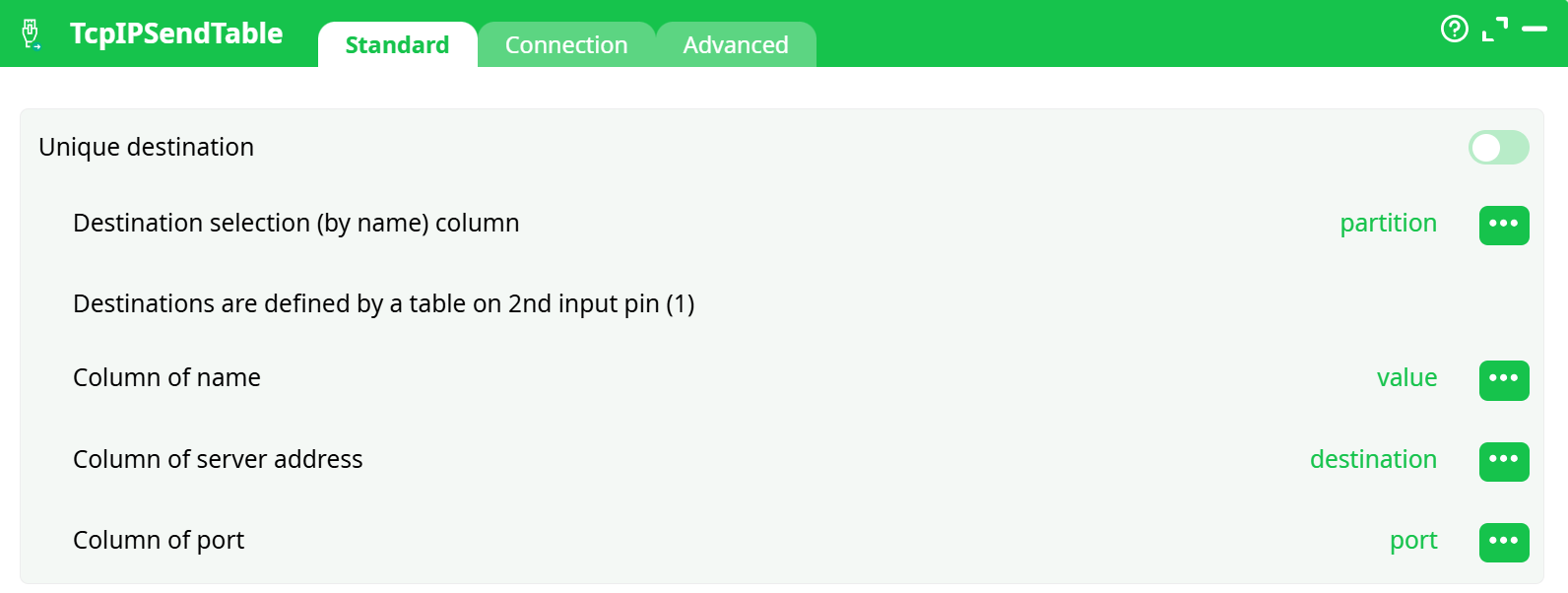
- The only destination
- Select destination based on column
- Destination are given on Pin 1 using a table with 3 columns
- Destination servers
- Destination ports
- Trigger value to select the destination
¶ Connection Tab
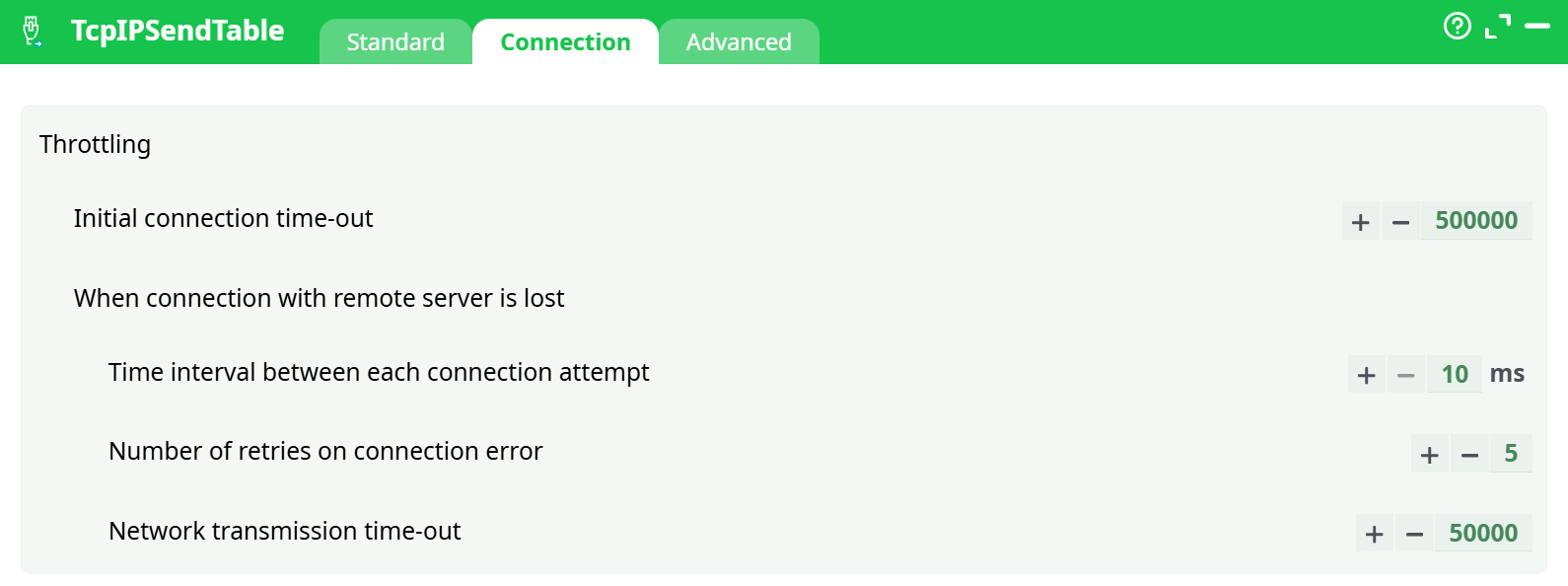
Parameters:
- Throttling
- Initial connection time-out
- When connection with remote server is lost
- Time interval between each connection attempt
- Retries on connection error
- Network transmission time-out
¶ Advanced Tab
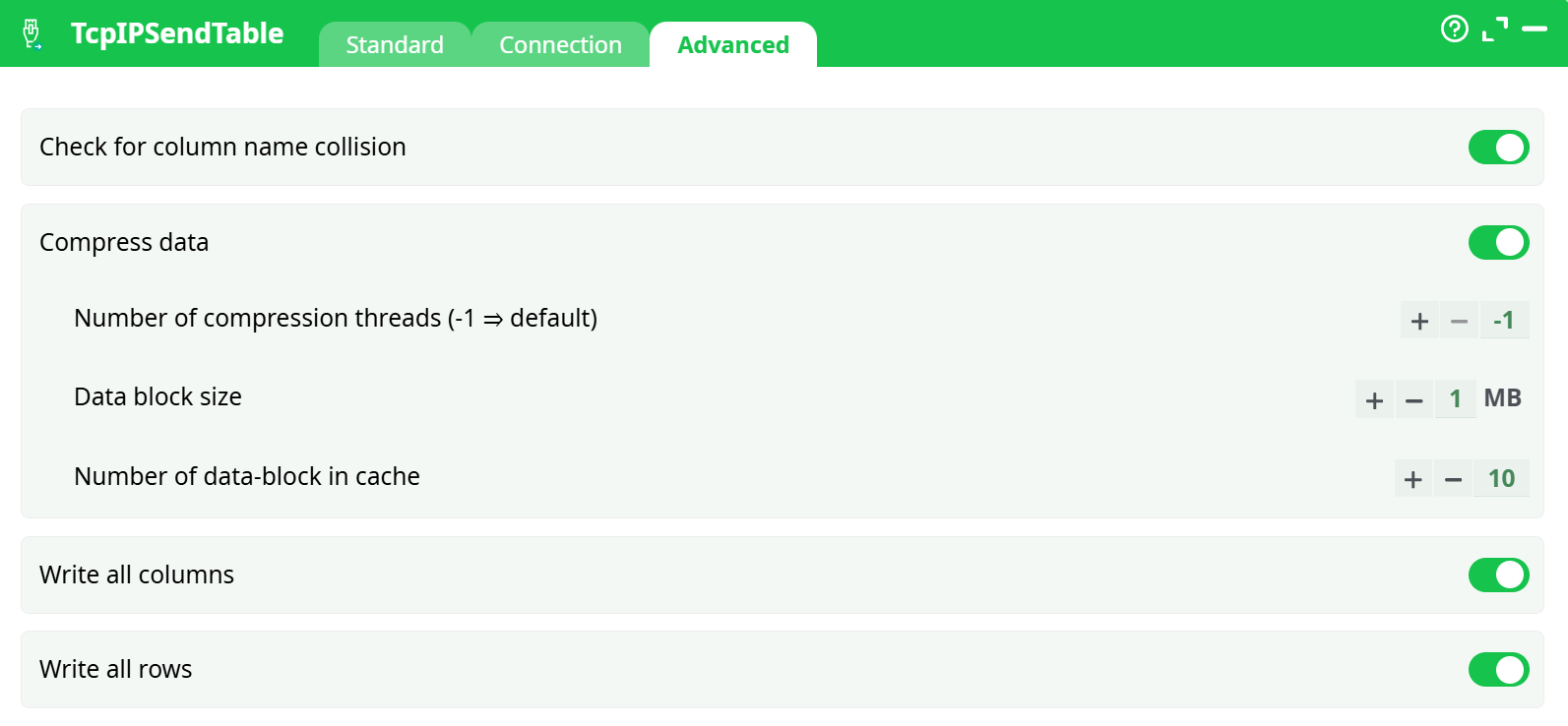
Parameters:
- Check for column name collision
- Compress data
- Number of compression threads (-1 = default)
- Data block size
- Number of data-block in cache
- Send all columns
- Send all rows
¶ About
The TcpIPReceiveTable action and the TcpIPSendTable action are used together to form the “Map” part inside a “Map-Reduce” algorithm (i.e. it allows ETL to make distributed computations on several PC’s).
Let’s have a look at a small example:
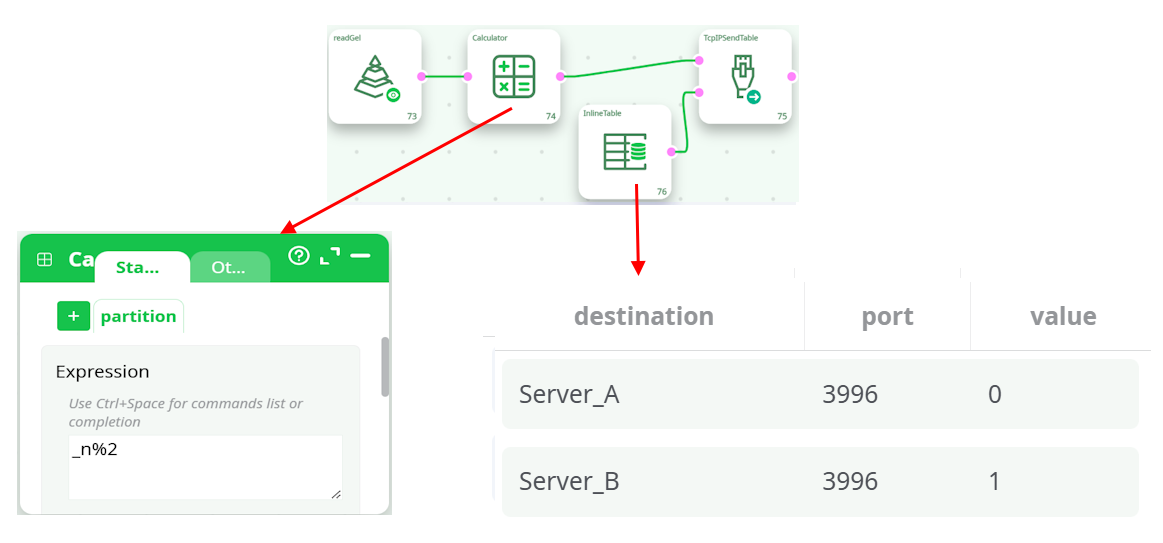
The above example sends half the row of the input table to the “Server_A” and the other half to the “Server_B”. The split is based on the “partition” column: i.e. All the rows where “partition” equals zero are sent to the “Server_A” (… and the others to the “Server_B”).
The TcpIPSendTable action use an asynchronous (i.e. non-blocking) I/O algorithms (See the documentation of readGel action about asynchronous I/O algorithms). This means that ETL is sending (and also compressing) several data-blocks (full of rows) while, simultaneously, running the rest of the data transformation. The maximum quantity of data-block kept in RAM is defined inside the parameter “Number of data-block in cache”. A large value allows to cope with sudden&brief “speed drops” of your computer network (but it also implies a higher RAM consumption).