¶ Description
Left-Join several tables into one gigantic table.
¶ Parameters
¶ Standard Tab
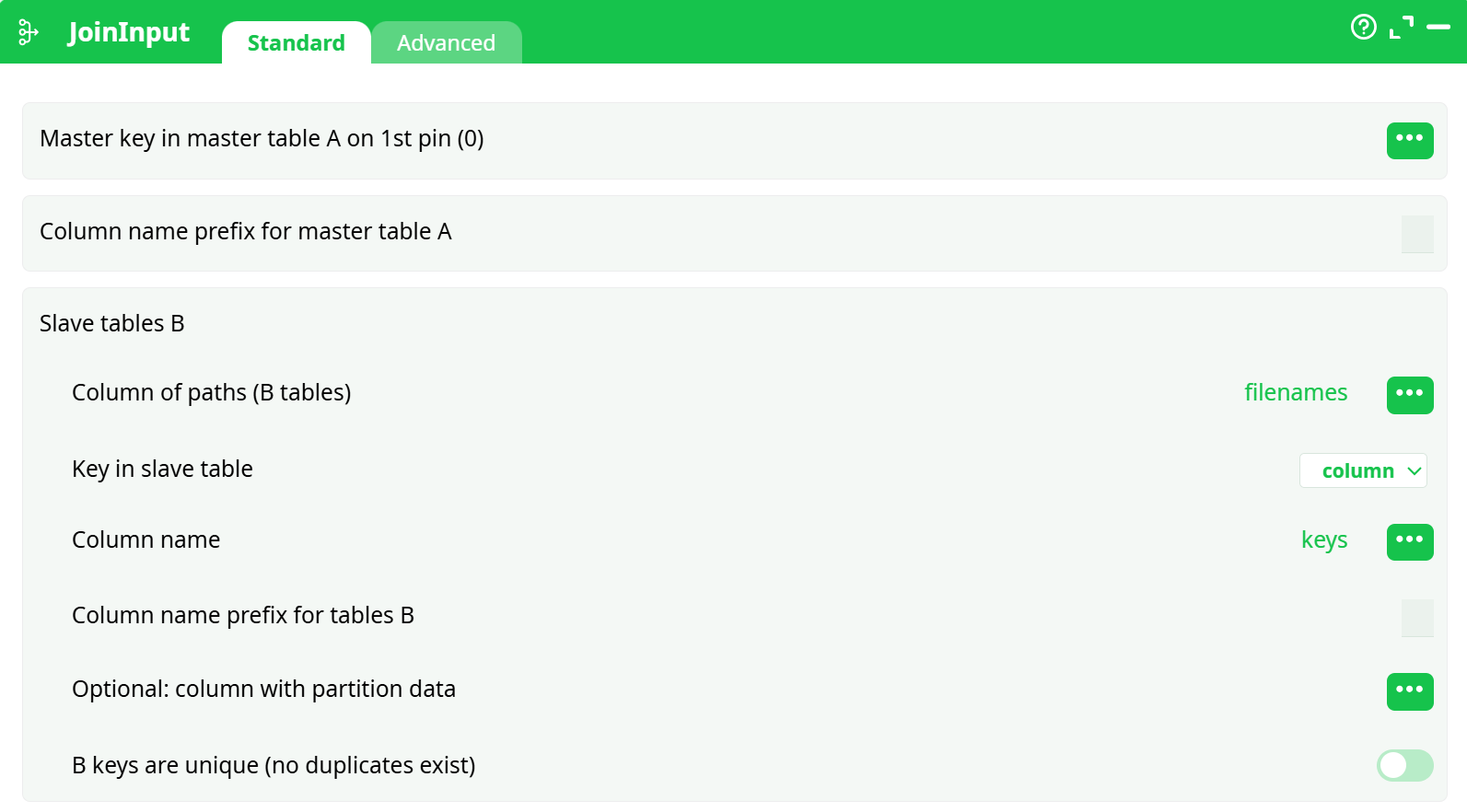
Parameters:
- Master key in master table A on 1st pin
- Column name prefix for master table A
- Slave tables B
- Column of paths (B tables)
- Key in slave
- Column name
- Column name prefix for tables B
- Optional : column with partition data
- B keys are unique (no duplicates exist)
¶ Advanced Tab
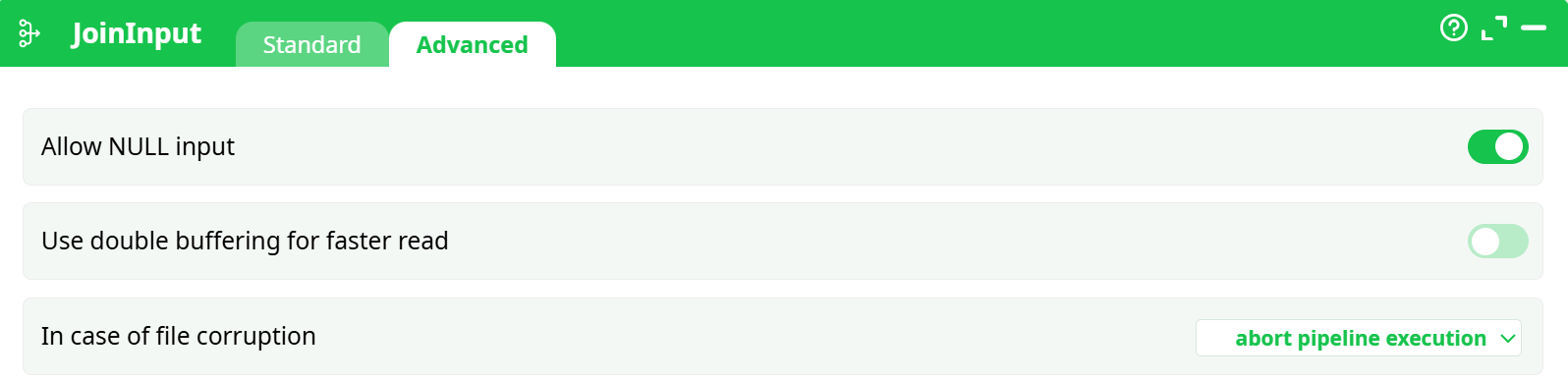
Parameters
- Allow NULL input
- Use double buffering for faster read
- In case of file corruption
¶ About
Note: All input tables must be sorted on the Key columns using the same sorting algorithm (either all numeric sort or all alphanumeric sort).
-
The first step before creating any predictive model is to build a learning dataset that contains as many “good” features as possible. This step is known as feature engineering.
-
Typically, each group of features is computed using a different graph. To save time, you can run all the required feature engineering graphs in parallel using the runPipelines action, the loopPipelines action, or the Loop Jenkins action.
-
Each feature engineering graph outputs a small
.gelfile containing additional features. -
The final step in constructing your learning dataset is to assemble all these small
.gelfiles into one large, unified.gelfile — this becomes your complete learning dataset. -
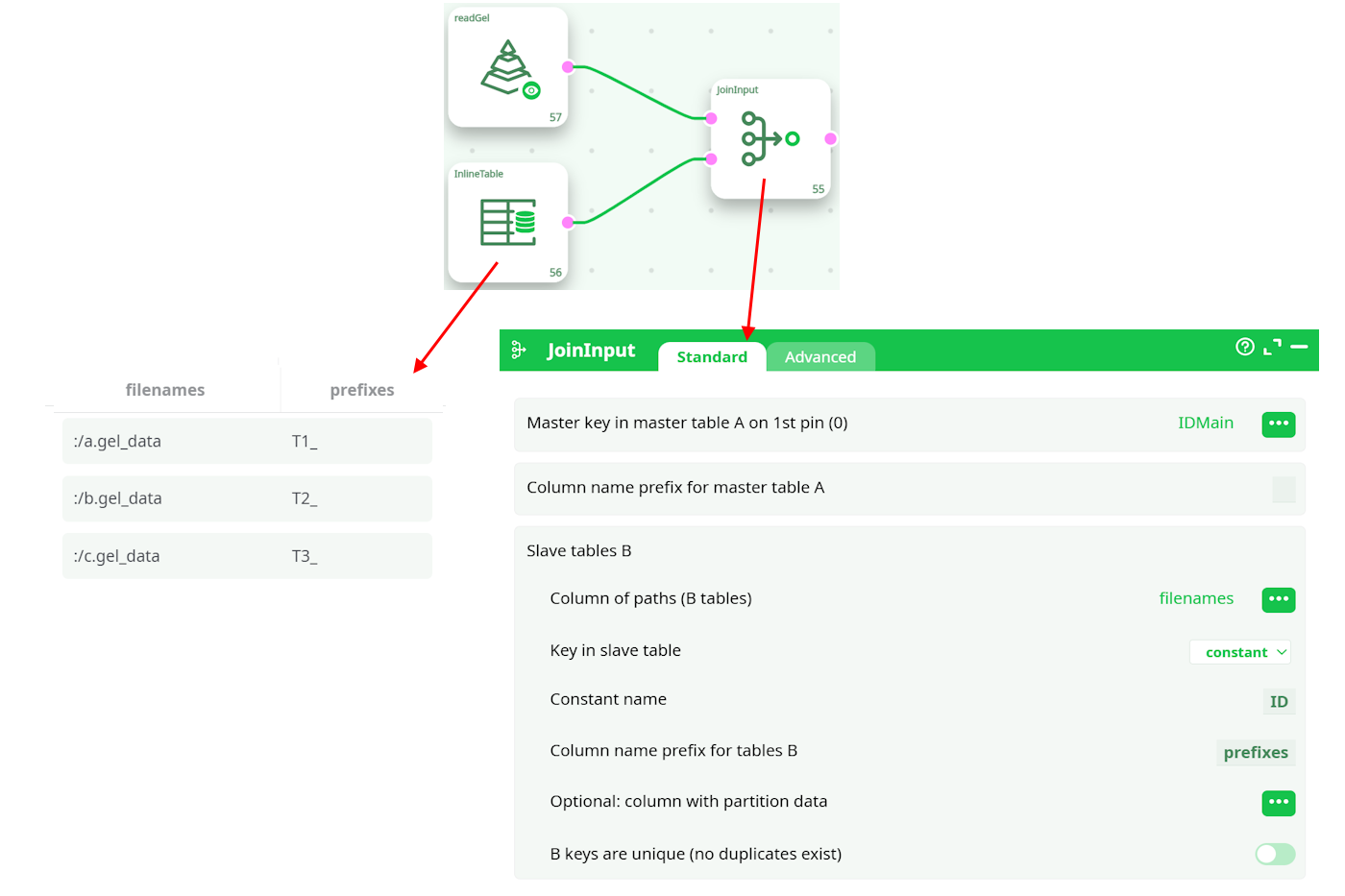
To illustrate how the JoinInput action works, consider the following example:
The goal is to add additional features to a
customer.gel_datatable. These features are initially stored in three “slave” tables:a.gel_data,b.gel_data, andc.gel_data.To perform this assembly, you can use any of the following graphs: